Mardi Himal Trek
From (per person)
Mardi Himal Trek Highlights
• Stand at Mardi Himal West Base Camp (4,250 m / 13,943 ft) for close views of Machhapuchhre and the Annapurna range.
• Trek through dense rhododendron and oak forests between Kande and Pitam Deurali.
• Follow a less-crowded trail compared to the main Annapurna Circuit and Poon Hill routes.
• Experience dramatic altitude gaining from 1,770 m at Kande to 4,250 m at the base camp — in just four days.
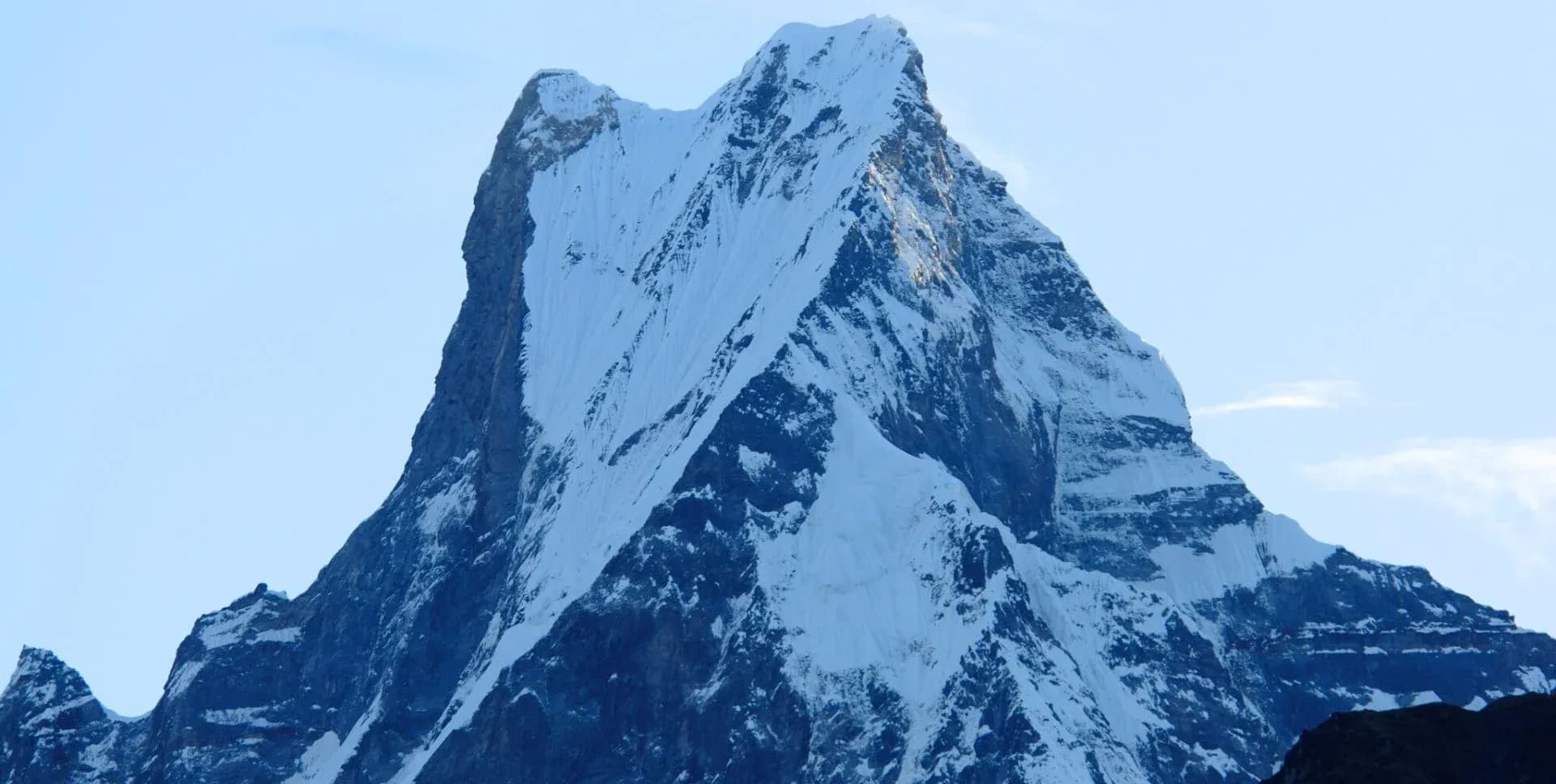
• Observe the twin-peak profile of Machhapuchhre (Fishtail Mountain) from multiple vantage points along the ridge.
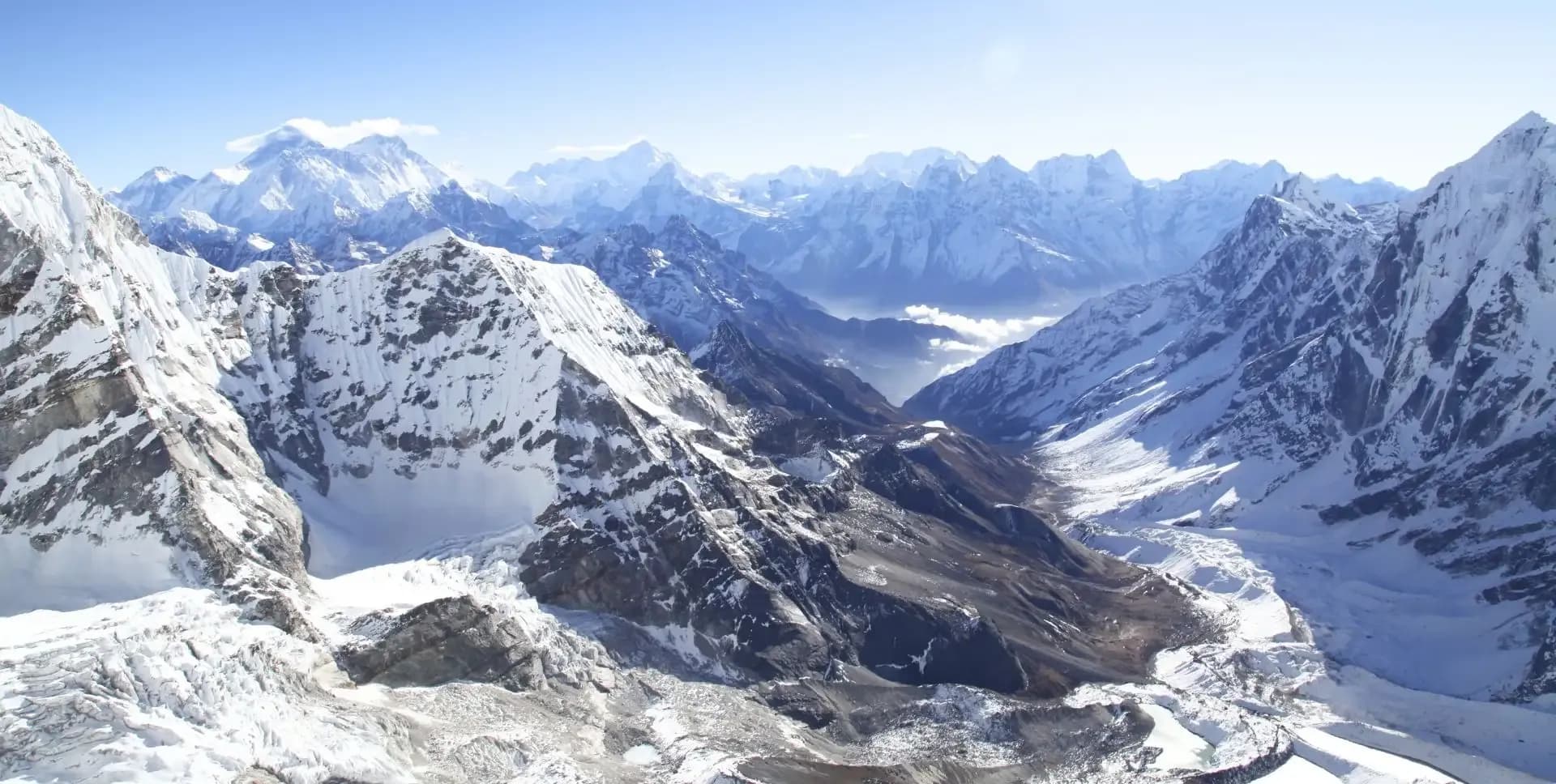
• View Annapurna South, Annapurna I, Hiunchuli, and Dhaulagiri from the upper ridge trail.
• Pass through the forest zone between Low Camp and High Camp, where cloud forest species, including mosses, orchids, and tree ferns, line the trail.
Mardi Himal Trek Overview
The Mardi Himal Trek follows a ridge trail on the south-western slope of Machhapuchhre, one of Nepal's most iconic peaks. The trek starts at Kande, a roadhead village north of Pokhara, and climbs steadily through forest zones to the base camp area. It ends at Siding village, from where trekkers drive back to Pokhara.
This Machhapuchhre trek runs through the Annapurna Conservation Area (ACAP). The route passes Pitam Deurali, Low Camp, and High Camp before reaching Mardi Himal West Base Camp at 4,250 m. Machhapuchhre, the triangular peak visible from Pokhara's Phewa Lake dominates the skyline for most of the upper section.
The Mardi Himal Trek is classified as a short trek in the Annapurna region. It suits trekkers with limited time who still want genuine Himalayan experience. The total active trekking duration is six days. Trekkers do not need technical climbing skills or specialized equipment. However, a reasonable level of physical fitness is necessary for the upper sections.
The trail climbs through three distinct vegetation zones. Dense rhododendron and oak forests cover the lower trail between Kande and Low Camp. The cloud forest zone marked by mosses, lichens, and orchids, occupies the mid-section between Low Camp and High Camp. Above the tree line, an open grassy ridge leads to the base camp area with unobstructed mountain views.
The Mardi Himal Trek gained official status as a trekking route in 2012. Since then, it has attracted trekkers looking for a quieter alternative to routes like the Annapurna Circuit or Ghorepani-Poon Hill. The trail sees fewer teahouses and lodges than other routes, though basic accommodation is available at Low Camp, High Camp, and Siding village.
This short trek travel through the Kaski and Gandaki districts of Gandaki Province. The route offers direct views of Annapurna I (8,091 m), Annapurna South (7,219 m), Hiunchuli (6,441 m), and Machhapuchhre (6,993 m). This concentration of high peaks within close distance makes the upper ridge one of the most panoramic viewpoints in the Annapurna region.
The descent from High Camp to Siding village drops approximately 1,840 m in a single day. This route follows a separate trail down to the Mardi Khola River Valley, passing through terraced fields and Gurung settlements before reaching Siding. From Siding, a road connects to Pokhara, completing the trekking circuit.
Mardi Himal Trek Itinerary
Tap any day to read the full programme.
Arrive in Kathmandu, the capital of Nepal, at Tribhuvan International Airport. Airport representatives assist with transfers to the hotel.
Kathmandu sits in the Bagmati Province and serves as the main entry point into Nepal. The city offers access to trekking gear shops, currency exchange, and travel services. The trek briefing typically takes place on this day.
The morning flight from Kathmandu to Pokhara takes approximately 25 minutes. The route passes over forested hills and river valleys. On clear days, the Annapurna and Manaslu ranges are visible from the aircraft.
Pokhara sits at 827 m above sea level in the Gandaki Province. It serves as the gateway city for most Annapurna region treks, including the Mardi Himal Trek. The city lies on the shore of Phewa Lake, from which Machhapuchhre twin-peaked silhouette is clearly visible on clear days.
The afternoon is free for rest, sightseeing, or gear checks. Trekkers can visit the lakeside area, the International Mountain Museum, or the Bindhyabasini Temple.
The drive from Pokhara to Kande takes approximately 1.5 to 2 hours along the Pokhara-Baglung Highway. Kande is a small roadhead village and the starting point of the Mardi Himal Trek. The drive passes through Naudanda and the Kaski district countryside.
From Kande, the trail begins with a gradual climb through forested terrain. The path ascends through dense rhododendron, oak, and pine trees. Pitam Deurali is a small pass located at 2,100 m, offering the first clear views of Machhapuchhre and the surrounding foothills.
The trek from Kande to Pitam Deurali takes approximately 3 to 4 hours at a steady pace. The trail is generally well-marked and follows a ridge path with occasional views across the Modi Khola Valley to the south.
Accommodation at Pitam Deurali consists of basic teahouses or lodges. The area marks the entry into the upper forest zone of the Mardi Himal trail.
The trail from Pitam Deurali continues along the ridge, climbing steadily through a thick forest of rhododendron, maple, and birch trees. This section of the Mardi Himal Trek passes through one of the denser forest zones on the route.
Low Camp sits at 2,985 m above sea level. The camp at this elevation is a transitional resting point used for initial acclimatization before the longer climb to High Camp.
The daily trekking time in this segment is approximately 4 to 5 hours. The gradient steepens progressively as the trail ascends from Pitam Deurali. Birdlife is active in this forest zone, with species including Himalayan monal, laughing thrush, and various sunbird species common along the trail.
Trekkers spend the afternoon at Low Camp, resting and adjusting to the altitude. The camp provides an opportunity for acclimatization before the significant elevation gain to High Camp next day.
The climb from Low Camp to High Camp represents the most demanding section of the Mardi Himal Trek. The gradient is steep in multiple sections, especially above the forest boundary.
The trail passes through the cloud forest zone in the lower half of this segment. Mosses and lichens cover the tree branches, and orchids grow on the forest floor. Above the tree line, the trail follows an open ridge with direct views of Machhapuchhre to the north.
High Camp at 3,540 m is the highest overnight stop on this short trek. Teahouses and basic lodges operate here during the main trekking seasons. The camp sits on a broad ridge with panoramic views of Annapurna South, Annapurna I, Hiunchuli, and Machhapuchhre.
Trekkers spend the afternoon at High Camp resting and acclimatizing. The evening temperature drops significantly at this altitude. The guide reviews the plan for the summit hike to Mardi Himal West Base Camp the following morning.
The day begins early, typically before dawn. Trekkers start the climb to Mardi Himal West Base Camp at 4,250 m. The trail follows the upper ridge above High Camp. The terrain becomes rocky and exposed as elevation increases.
Mardi Himal West Base Camp sits directly below the crest of Mardi Himal and offers the closest accessible views of Machhapuchhre south face on this route. From the base camp, the Annapurna Sanctuary Wall, the Modi Khola valley, and the ice fields of the Annapurna range are all visible.
This is the highest point of the Mardi Himal Trek and the Machhapuchhre trek circuit. Surrounding peaks visible from this point include Machhapuchhre (6,993 m), Annapurna I (8,091 m), Annapurna South (7,219 m), Hiunchuli (6,441 m), and Gangapurna (7,454 m).
After time at the base camp, the descent begins. The route down is separate from the ascent trail. Trekkers descend steeply from High Camp through the forest and onto terraced farmland. The descent to Siding village drops approximately 2,550 m from base camp — a long but rewarding final descent on this short trek.
Siding is a traditional Gurung village at 1,700 m. The village lies along the Mardi Khola River and is surrounded by terraced fields. Basic lodges and teahouses are available here. The descent from High Camp to Siding takes approximately 6 to 7 hours.
A vehicle picks ups from Siding village in the morning. The drive back to Pokhara takes approximately 2 to 3 hours along the Mardi Khola valley road and connects highways.
On arrival in Pokhara, you will check in to their hotel and have the afternoon free. Many use this time to visit the lakeside, explore the local market, or rest after the demanding descent of the previous day.
The morning flight from Pokhara returns trekkers to Kathmandu. The flight departs from Pokhara Regional Airport and takes approximately 25 minutes.
Upon arrival in Kathmandu, you will be transferred to their hotel. The afternoon is free for shopping, city sightseeing, or relaxation. Popular areas include Thamel, Durbar Square, and Boudhanath Stupa.
Trekkers prepare for departure from Kathmandu. Airport transfers are coordinated based on flight schedules. Check-out from the hotel follows standard checkout times.
Mardi Himal Trek Route Map
Route Map
Altitude Profile
Inclusions
• Private airport transfers in Kathmandu (arrival & departure)
• 2 nights at a 3-star Kathmandu hotel (twin-share, bed & breakfast)
• 2 nights at a 3-star Pokhara hotel (twin-share, bed & breakfast)
• Return flight between Pokhara and Kathmandu with standard baggage allowance
• Private transfers from Pokhara to Kande and from Siding Village to Pokhara
• 4 nights twin-share lodge accommodation during the trek
• Full-board meals throughout the trek (breakfast, lunch, dinner, tea & coffee)
• Drinking water and hot water for bottle refills at all lodge stops
• All required trekking permits (Annapurna Conservation Area, Machhapuchhre Rural Municipality Entry Permit & TIMS Card)
• Senior English-speaking, government-licensed lead guide, fully covered (wages, meals, accommodation & insurance)
• Assistant guide for every 4 clients, fully covered
• One porter per 2 clients (max 15 kg/client), fully covered
• Emergency medical kit throughout the trek
Exclusions
• International Airfare to/from Kathmandu
• Nepal entry visa fee
• Personal travel, medical & emergency evacuation insurance (mandatory; arrange prior to departure)
• Lunch & dinner in Kathmandu and Pokhara
• Optional sightseeing in Kathmandu and Pokhara
• Additional hotel nights beyond the itinerary (available on request)
• Single room supplement or forced single room charges, where applicable
• Personal trekking gear & clothing (sleeping bag, boots, trekking poles, down jacket, etc.)
• Alcoholic beverages, specialty hot drinks & bottled/canned drinks during the trek
• Lodge extras charged locally: hot showers, battery charging & Wi-Fi
• Any personal expenses not listed under inclusion
• Guide & porter gratuities (recommended: USD 150/guide, USD 100/porter — at client's discretion)
Date & Price

Want a Private or Tailored Trip?
Book on your own dates, bring a private group, or adjust the itinerary. Our team replies within 24 hours.
Reviews
Write a review
No reviews yet. Be the first to share your experience.
Gallery
No gallery images available.
From (per person)
People also viewed