Luxury EBC Trek
From (per person)
Luxury EBC Trek Highlights
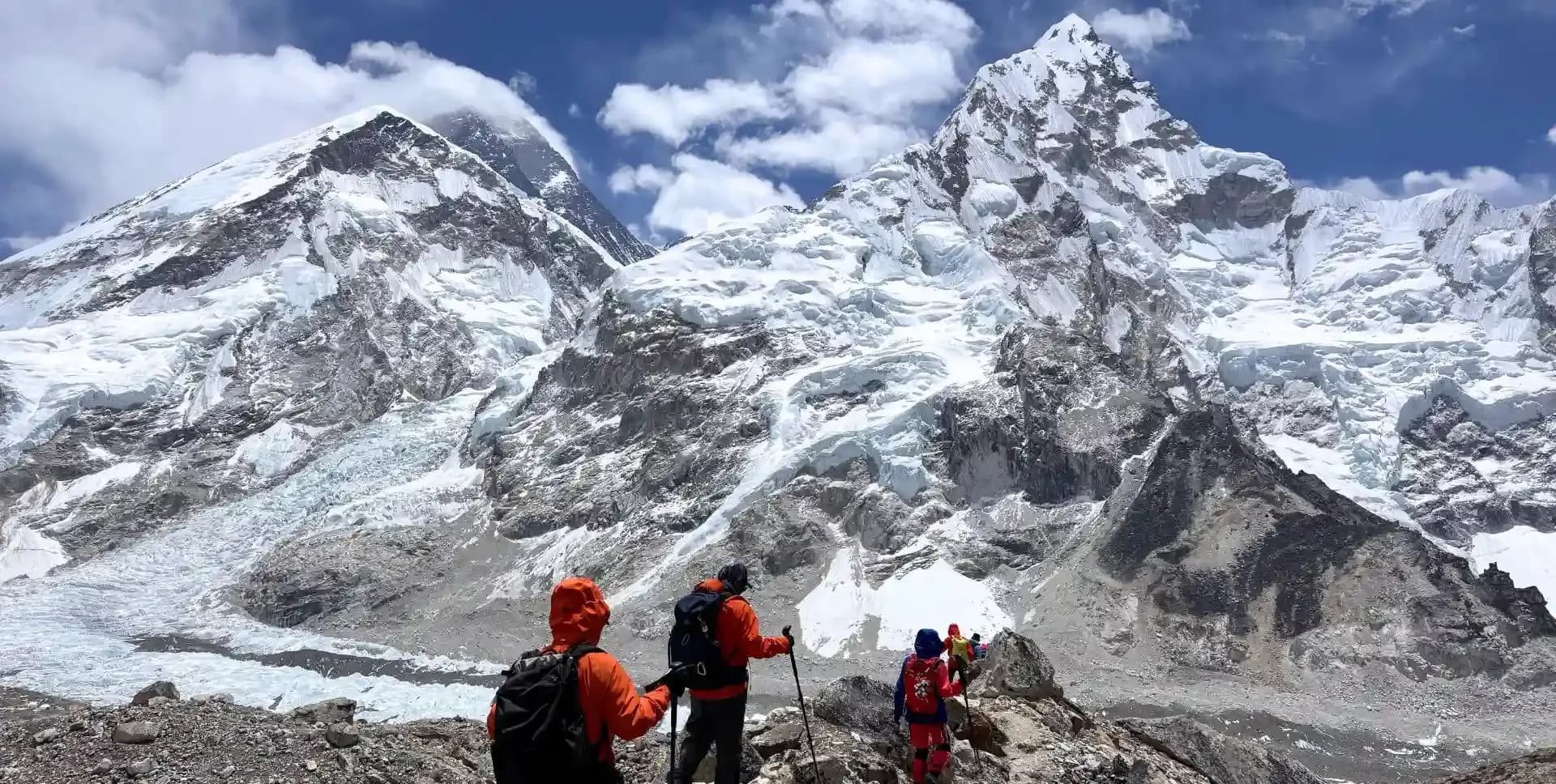
• Reach Everest Base Camp (5,364 m / 17,598 ft) for a close-up view of the Khumbu Icefall.
• Hike to Kala Patthar (5,545 m / 18,192 ft) witness Everest close-up view and for a 360-degree panorama of Himalayan giants.
• Spend 2 nights at Everest Base Camp expedition camp, a rare and memorable experience.
• Stay in premium luxury lodges, including Kathmandu Marriott Hotel and Mountain Lodges of Nepal.
• Fly by helicopter from Everest Base Camp to Lukla and onward to Kathmandu, a dramatic heli return.
• Visit Tengboche Monastery, Khumbu's most celebrated Buddhist monastery.
• See towering peaks: Lhotse (8,516 m), Makalu (8,463 m), Cho Oyu (8,201 m), and Ama Dablam.
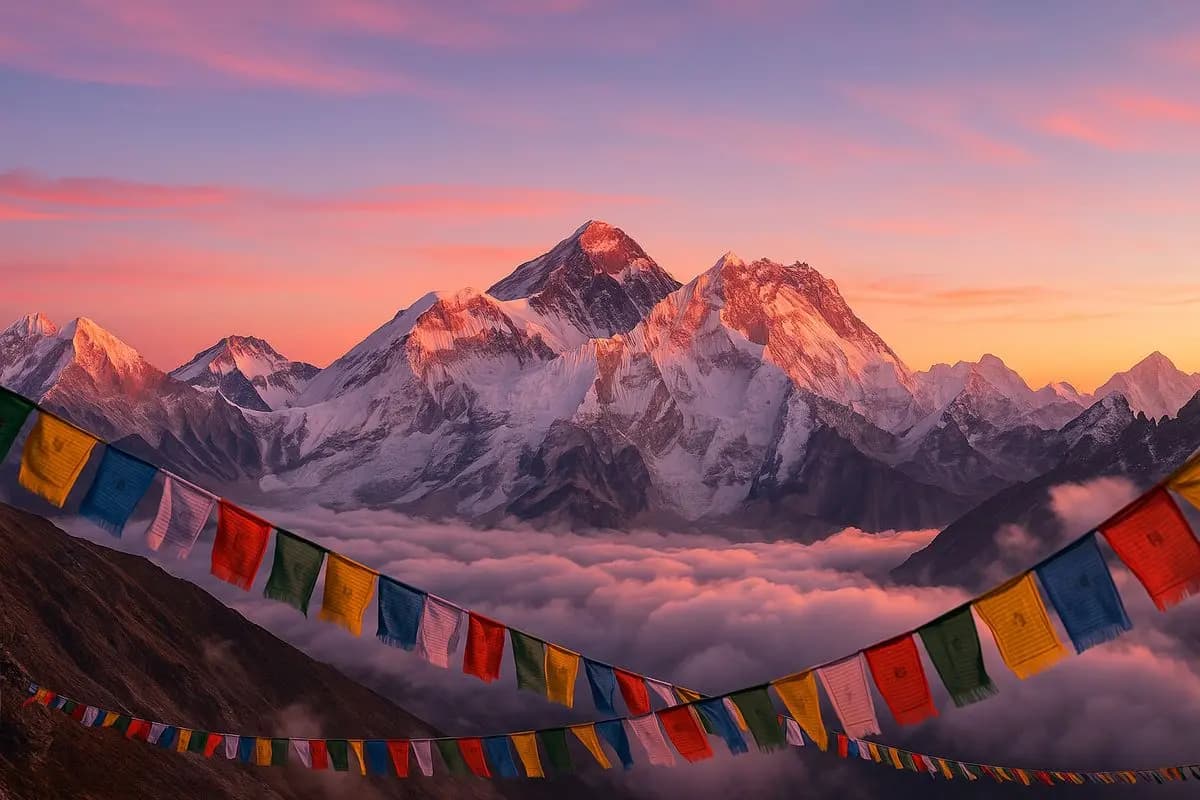
• Discover lively Sherpa villages, ancient monasteries, mani walls, and prayer flags.
• Spot wildlife such as musk deer, Himalayan tahr, and blue sheep in Sagarmatha National Park.
Luxury EBC Trek Overview
The Luxury Everest Base Camp Trek and Heli Return program combines classic high-altitude trekking with premium comfort at every stage. This 14-day itinerary suits both experienced travelers and those attempting Everest Base Camp for the first time. The route follows the legendary Khumbu trail through Sagarmatha National Park, Nepal's highest protected area.
You stay in hand-selected luxury lodges throughout the journey. These include the Kathmandu Marriott Hotel, Mountain Lodges of Nepal (MLN) in Lukla, Phakding, and Namche, The Himalayan in Tengboche, Hotel Countryside in Dingboche, and New EBC in Lobuche. The program culminates with 2 nights at Everest Base Camp expedition camp, including an overnight at Everest tented camp at the foot of the Khumbu Icefall.
The EBC trek in luxury follows the Dudh Kosi River and its tributaries northeast of Lukla. The trail passes through Namche Bazar (3,440 m), the commercial hub of the Khumbu region, and continues through Tengboche (3,867 m), Dingboche (4,410 m), and Lobuche (4,940 m). The final push reaches Gorakshep (5,164 m), Kala Patthar (5,545 m), and Everest Base Camp (5,364 m).
Acclimatization is built into the schedule with two rest days. one at Namche Bazar and one at Dingboche. At Namche, you hike to the Hotel Everest View (3,880 m) for mountain panoramas. At Dingboche, a day hike to Nangkartshang Peak (5,083 m) aids altitude adjustment and rewards you with views of four 8,000-meter peaks. Proper acclimatization reduces the risk of altitude sickness and ensures a safer, more enjoyable comfort trek.
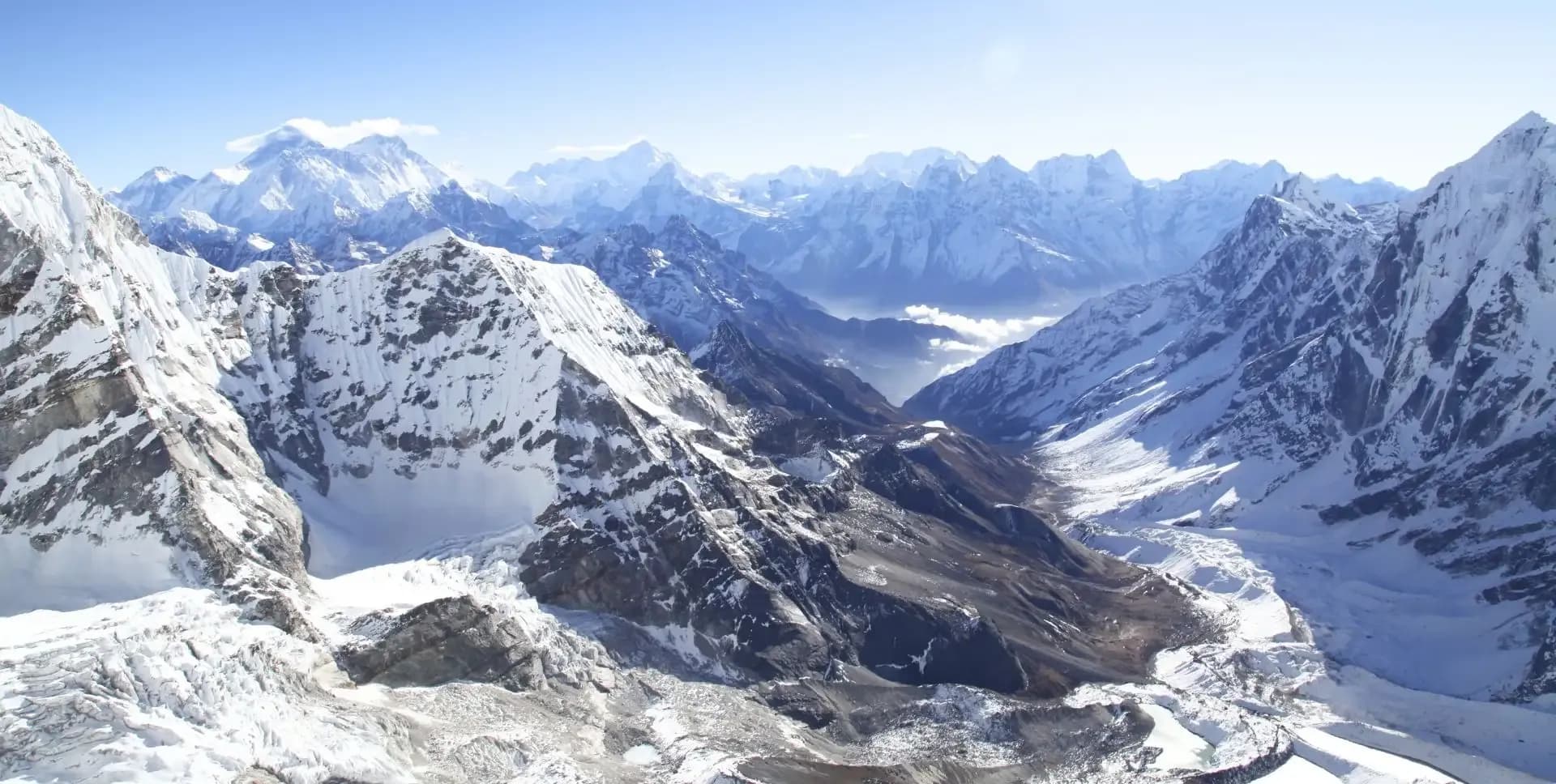
The mountain scenery throughout the route is extraordinary. Peaks like Ama Dablam, Thamserku, Kwangde, Pumori, Lhotse, and Makalu rise above the trail at every turn. Forests of birch, pine, and rhododendron cover the lower valleys, while the landscape above 4,000 m becomes open, rocky, and dramatic. The Khumbu Glacier, one of the world's highest glaciers, lines the upper trail from Lobuche to Base Camp.
Culture and history are intertwined with each section of the trek. Sherpa villages, Buddhist monasteries, mani walls, and prayer flags mark the entire route. Tengboche Monastery, the most famous in Khumbu, sits at 3,867 m with Ama Dablam rising directly behind it. Pangboche, the oldest monastery in the region, dates to 1667 and carries deep religious significance. You will gain a direct and meaningful connection to Sherpa traditions along the way.
The return journey by helicopter from Everest Base Camp to Lukla and onward to Kathmandu is a dramatic highlight of the program. The heli return eliminates several days of descent trekking and offers aerial views of the Himalayas that few travelers ever experience. It is the defining feature of this luxury Everest Base Camp program.
Luxury EBC Trek Itinerary
Tap any day to read the full programme.
You arrive at Tribhuvan International Airport in Kathmandu. A guide meets them at the arrival area and arranges a private transfer to the Kathmandu Marriott Hotel. This five-star property in the heart of the city provides a comfortable and well-appointed start to the program.
In the afternoon, the guide conducts a pre-trek briefing. The session covers the Lukla flight schedule, safety procedures, altitude sickness prevention, equipment inspection, and the weather forecast.
This day is reserved for final preparation before the trek begins. You review their gear with the guide and purchase any missing equipment from Thamel, Kathmandu's main trekking district. Items such as thermal layers, trekking poles, and altitude medication are readily available nearby.
The extra day in Kathmandu also helps with jet lag and time zone adjustment. You can explore the city at their own pace. Popular nearby attractions include Boudhanath Stupa, Pashupatinath Temple, and the Kathmandu Durbar Square. This preparation day is essential for the days ahead on the comfort trek.
The trek begins with an early morning flight from Kathmandu to Lukla. The 30-minute scenic flight offers clear Himalayan views if weather permits. You are advised to choose a left side window seat for the best mountain panoramas. The landing at Tenzing Hillary Airport in Lukla is short and steep, one of the most dramatic airport approaches in the world.
Lukla (2,845 m) serves as the gateway to the Everest region. The town is lined with shops, lodges, and gear stores. After meeting the porters at Mountain Lodges of Nepal in Lukla, the team sets off toward Phakding. The trail descends gently through Chaurikharka, where a school built by Sir Edmund Hillary still serves the local community.
The route passes traditional Kani gateways decorated with prayer wheels and colorful Buddhist paintings. It crosses the Thado Kosi River and continues through the villages of Ghat and Phakding along the banks of the Dudh Kosi. The trail offers early views of the rugged peak of Kusum Khanguru. You arrive at Phakding (2,610 m) at the end of the afternoon and check in to Mountain Lodges of Nepal.
The trail from Phakding follows the northward west bank of the Dudh Kosi River. It passes through the small settlements of Toktok and Benkar before crossing several suspension bridges decorated with prayer flags. The famous Tenzing-Hillary Bridge, one of the highest suspension bridges in the region, crosses the confluence of the Bhote Kosi and Dudh Kosi rivers.
After the bridge, the trail enters Sagarmatha National Park at Monjo (2,840 m). The guide arranges the national park permit here. Jorsale (2,810 m) marks the last settlement before the steep ascent to Namche begins. This 600-meter climb winds through dense pine and rhododendron forests with numerous switchbacks.
On a clear day, the first view of Mount Everest appears above the Lhotse and Nuptse ridge during the climb. It is a powerful and motivating moment on the EBC trek in luxury. You arrive at Namche Bazar (3,440 m) after passing through a large Kani gateway into the busy hillside town. Mountain Lodges of Nepal in Namche provides a premium overnight stay.
Today focuses on acclimatization at Namche Bazar. Staying active while not gaining significant altitude is the key principle. After breakfast, you climb the trail above Namche toward the Sagarmatha National Park headquarters and army post. The elevated ridge reveals extraordinary views of Everest, Lhotse, Nuptse, Ama Dablam, and the sacred Khumbila peak (5,765 m).
The trail continues to the Syangboche airfield (3,740 m) and then to the Hotel Everest View (3,880 m), a 30-minute walk across open grassy slopes. The hotel terrace affords one of the finest vantage points on the trail , with Everest, Ama Dablam, Thamserku, and Kangtega all visible at once. You enjoy a warm drink here before returning to Namche Bazar.
This acclimatization hike reaches 3,880 m before returning to 3,440 m for the night, a classic 'climb high, sleep low' strategy. It helps the body produce more red blood cells and adapt to the thinner air. Proper acclimatization at Namche Bazar substantially lowers the risk of altitude sickness on the higher sections of the comfort trek ahead.
The trail from Namche Bazar climbs steeply to a high ridge with sweeping views of Everest, Lhotse, Ama Dablam, and the neighboring peaks. The path then contours above the Dudh Kosi River through a series of gentle ups and downs. Across the valley, the rooftop of Tengboche Monastery is visible on its ridge, backed by Ama Dablam's dramatic silhouette.
The trail descends through dense rhododendron and birch forest to Phunki Tenga (3,250 m), the lowest point after Namche Bazar. Here, water powered prayer wheels spin beside the river. A steep two-to-three-hour climb through juniper, and rhododendron forest leads out of the valley. In spring, scarlet blossoms line the hillside all the way to Tengboche.
Tengboche (3,867 m) is widely considered the most scenic village in the Khumbu region. The meadow setting, framed by Ama Dablam, Thamserku, Kangtega, and the Lhotse and Nuptse wall, is unforgettable. Sunrise and sunset from the monastery grounds transform the adjacent peaks into shades of gold, orange, and pink. Full moon nights here rank among the most otherworldly experiences in Himalayan trekking.
Tengboche Monastery, rebuilt after a 1989 fire, remains the sacred and cultural heart of the Khumbu. You can visit the main hall, where a towering Buddha statue presides over ancient murals and sacred artefacts. Photography inside the monastery is not permitted, but the atmosphere of incense, chanting, and flickering butter lamps leaves a deep impression. The overnight stay is at The Himalayan, Tengboche’s premier lodge.
The trail leaves Tengboche and descends through birch and rhododendron forest toward the Imja Khola valley. Ama Dablam's north face looms large and close. After a short distance, the trail passes through Deboche, a quiet hamlet beside the river. The path then follows the Imja Khola upstream, away from the Dudh Kosi, through peaceful forest with fine mountain views.
Pangboche (3,930 m) appears ahead, divided into upper and lower sections. The lower section borders the Imja Khola and potato fields, while the upper section hosts the historic Pangboche Monastery, the oldest in Khumbu, founded in 1667. A juniper grove with mani walls surrounds the monastery. Although simple in design, it holds deep religious significance for the Sherpa community.
Beyond Pangboche, the tree line disappears. The landscape becomes open and rocky, with yak pastures and shepherd huts on either side. The trail passes Shomare and climbs steadily through Somare to the trail junction at Tsuro Wog. From here, the path follows the right bank of the Imja Khola before cresting a final ridge into Dingboche (4,410 m). Stone walls divide barley and potato fields into this windswept but sunlit village. Hotel Countryside provides a warm and comfortable overnight.
Today is the second acclimatization day of the comfort trek. After breakfast, you hike north from Dingboche toward the ridge above the village. The climb is steady and rewards you with expanding views of Ama Dablam, Lhotse, Makalu, and Cho Oyu. The panorama improves with every 100 meters gained.
The trail continues to the summit of Nangkartshang Peak (5,083 m / 16,677 ft). From the top, you can see three of the world's 8,000-meter peaks at once: Lhotse, Makalu, and Cho Oyu. To the west, Cholatse and Taboche rise sharply. The Khumbu Khola valley stretches below, with the Lobuche trail visible on the far side. The famous Island Peak (Imja Tse) and Cho Polu stand to the east.
The hike follows the 'climb high, sleep low' principle. After spending time at the summit, you return to Dingboche for the night. The descent takes less than half the time of the ascent. Back at Hotel Countryside, you rest, hydrate, and prepare for the final push toward the higher camps of the Everest Base Camp in Luxury program.
The trail from Dingboche climbs above the village and crosses a wide, flat terrace above the Khumbu Khola valley. The landscape becomes stark and empty, dotted with stone huts at Dusa (4,510 m). Cholatse and Taboche rise steeply to the left, while the pyramid-shaped Lobuche Peak appears ahead. Behind, Ama Dablam and Thamserku dominate the skyline.
The trail descends to Dughla (4,600 m), beside the Khumbu Khola, an ideal lunch stop. A steep ascent from Dughla climbs the rocky moraine of the Khumbu Glacier to reach Chupki Lhara (4,840 m), also known as Memorial Park. Stone cairns and prayer flags here honor mountaineers lost on Everest, including Scott Fischer and Babu Chiri Sherpa. The site is a solemn and moving waypoint on the EBC trek in luxury.
From the Memorial Park, the trail drops back to the glacier moraine. Khumbutse, Lingtren, and Pumori, peaks on the Nepal-Tibet border, appear ahead for the first time. Nuptse rises to the right. The path follows the glacier edge and a murmuring meltwater stream before reaching Lobuche (4,940 m). Temperatures here drop below -5°C even in October and May. You check in to New EBC lodge and rest well.
This is the longest and most rewarding day of the entire program. The trail from Lobuche crosses a shallow glacial stream and follows the lateral moraine of the Khumbu Glacier. The peaks of Pumori, Lingtren, Khumbutse, and the massive wall of Nuptse rise ahead. The path reaches a flat viewpoint at Thangma Riju, where 360-degree views of Taboche, Changtse, and the Mahalangur Himal unfold.
The trail crosses the rocky moraine of the Changri Glacier before descending to Gorakshep (5,164 m / 16,942 ft), a tiny settlement at the edge of a dried glacial lake. From Gorakshep, Kala Patthar is visible directly above under Pumori. The trekking team sets down bags at the lodge and begins the ascent of Kala Patthar (5,545 m / 18,192 ft).
The climb to Kala Patthar is steep and demanding at this altitude. The summit offers the finest close-up view of Everest on the entire trek. You see the Khumbu Icefall, the Western Cwm, the Lhotse face, and the dark summit pyramid of Everest rising above everything. This is the defining viewpoint of the Everest Base Camp in Luxury program. After time at the summit, you descend to Gorakshep for a brief rest.
In the afternoon, the team continues to Everest Base Camp (5,364 m / 17,598 ft). The trail crosses the old Gorakshep lakebed and climbs onto the lateral moraine of the Khumbu Glacier. Scrambling over boulders, with Nuptse's ice walls rising above, the path reaches Base Camp after roughly three kilometers. In spring, Base Camp is filled with expedition tents and the activity of Everest-bound climbing teams. The Khumbu Icefall, one of the most dangerous sections of the Everest route, begins directly above.
You settle into the Everest Base Camp expedition camp for the night. This marks the first of 2 nights at Everest Base Camp expedition camp, a rare and exclusive experience that few trekking programs offer. The overnight at Everest tented camp places you at the very foot of the world's highest mountain. The silence, broken only by the occasional crack and groan of the glacier, is unlike anything found at lower altitudes.
The second night at Everest Base Camp expedition camp gives you additional time at this historic location. The sunrise light on the Khumbu Icefall and the neighboring peaks is extraordinary. You can explore the glacier edge, observe the icefall's towering seracs up close, and watch any active expedition teams preparing loads for their climb above.
Everest Base Camp sits at the base of the Khumbu Icefall, the first major obstacle for all climbers attempting the summit via the South Col route. The icefall is a churning mass of crevasses, ice towers, and moving seracs. From Base Camp, the scale of the challenge that mountaineers face is immediately clear. Standing here, surrounded by the walls of Nuptse, Lhotse, and the West Shoulder of Everest, gives context that no photograph fully captures.
This extra day also allows you to recover from the intense Day 10 schedule. Spending another overnight at Everest tented camp provides genuine immersion in the high-altitude environment. The experience of sleeping at 5,364 m, beneath Everest's south face, is one of the most memorable and defining features of the EBC trek in luxury.
You are advised to stay warm, hydrated, and well rested during this day. Light walks around the Base Camp area are possible, but significant exertion is discouraged at this altitude. The tented camp is fully equipped for high-altitude comfort, with meals and sleeping arrangements managed by the expedition camp support team. Hot meals, warm sleeping bags, and attentive staff ensure a surprisingly comfortable night at nearly 5,400 meters.
This is the helicopter return day, one of the most dramatic moments of the entire program. A helicopter arrives at Everest Base Camp in the morning and carries you directly to Lukla, bypassing the entire descent route. The heli return provides sweeping aerial views of the Khumbu Glacier, Namche Bazar, and the chain of Himalayan peaks stretching in every direction.
At Lukla, you board a second helicopter for the onward flight to Kathmandu. The combined helicopter journey from EBC to Kathmandu covers terrain that would take three to four days on foot. The aerial perspective, looking down on the trails, ridges, and valleys just trekked, gives a powerful sense of scale and achievement.
Upon landing in Kathmandu, a private vehicle transfers you to the Kathmandu Marriott Hotel. The rest of the day is free for relaxation, shopping, or independent exploration. The guide provides recommendations for dining, sightseeing, and spa services in the city.
This day serves as a contingency buffer and a relaxed finale to the program. If all flights and logistics ran as planned, you enjoy a full free day in Kathmandu. The city features numerous cultural and heritage sites within easy reach of the Kathmandu Marriott Hotel. Popular destinations include Boudhanath Stupa, Pashupatinath Temple, Swayambhunath (Monkey Temple), Patan Durbar Square, and Bhaktapur Durbar Square.
Boudhanath Stupa is one of the largest Buddhist stupas in the world and a UNESCO World Heritage Site. Pashupatinath Temple, on the banks of the Bagmati River, is one of the most sacred Hindu sites in Asia. Both sites are a short drive from the hotel and provide meaningful cultural context to close the program.
In the evening, a farewell dinner is arranged with the trek guide and a company representative. You are encouraged to share feedback from the program at this gathering. A written feedback form is also sent separately after departure. The guide delivers a final debrief on airport transfer timings for the following morning.
This is the final day of the Luxury Everest Base Camp program. You check out of the Kathmandu Marriott Hotel and proceed to Tribhuvan International Airport for their onward international flights. A private airport transfer is arranged in advance by the program team. You should be ready at the hotel lobby at least three hours before their scheduled flight departure time.
The guide or a company staff member accompanies you to the airport and assists with the check-in process. With the final farewells exchanged, the program concludes, leaving you with the experience of having trekked to Everest Base Camp in luxury.
Luxury EBC Trek Route Map
Route Map
Altitude Profile
Inclusions
• Private airport transfers in Kathmandu (arrival & departure)
• 3 nights at a 3-star Kathmandu hotel (twin-share, bed & breakfast)
• One-way flight from Kathmandu/Ramechhap to Lukla with standard baggage allowance
• One-way helicopter flight from Everest Base Camp via Lukla to Kathmandu
• 7 nights twin-share lodge accommodation during the trek
• 2 nights tented camp accommodation at Everest Base Camp with the expedition team
• Full-board meals throughout the trek (breakfast, lunch, dinner, tea & coffee)
• Drinking water and hot water for bottle refills at all lodge stops
• All required permits (Sagarmatha National Park & Khumbu Pasang Lhamu Rural Municipality)
• Senior English-speaking, government-licensed lead guide, fully covered (wages, meals, accommodation & insurance)
• Assistant guide for every 4 clients, fully covered
• One porter per 2 clients (max 15 kg/client), fully covered
• Emergency medical kit throughout the trek
• Supplemental oxygen, mask & regulator for emergency use
Exclusions
• International Airfare to/from Kathmandu
• Nepal entry visa fee
• Personal travel, medical & emergency evacuation insurance (mandatory; arrange prior to departure)
• Lunch & dinner in Kathmandu
• Additional Kathmandu nights beyond the itinerary (available on request)
• Single room supplement or forced single room charges, where applicable
• Personal trekking gear & clothing (sleeping bag, boots, trekking poles, down jacket, etc.)
• Alcoholic beverages, specialty hot drinks & bottled/canned drinks during the trek
• Lodge extras charged locally: hot showers, battery charging & Wi-Fi
• Any personal expenses not listed under inclusion
• Guide & porter gratuities (recommended: USD 150/guide, USD 100/porter — at client's discretion)
Date & Price
Want a Private or Tailored Trip?
Book on your own dates, bring a private group, or adjust the itinerary. Our team replies within 24 hours.
Reviews
Write a review
No reviews yet. Be the first to share your experience.
Gallery
No gallery images available.
From (per person)
People also viewed