Lobuche Peak Climbing
From (per person)
Lobuche Peak Climbing Highlights
• Climb Lobuche East (6,119 m / 20,075 ft), one of the finest and most accessible 6,000-metre peaks in Nepal, located right on the Everest Base Camp trekking route.
• Close-up views of four 8,000-metre giants: Everest, Lhotse, Cho Oyu and Makalu.
• Sweeping panorama of Pumori, Ama Dablam, Baruntse, Nuptse, Cholatse, Taboche and many other 6,000-metre peaks from the summit.
• Visit Everest Base Camp (5,364 m) and climb Kala Patthar (5,545 m) for sunrise over Everest before your summit push.
• An ideal first Himalayan peak for beginner mountaineers preparing for higher objectives above 6,000 meters.
• Carefully paced 18-day itinerary with dedicated acclimatization days in Namche Bazaar and Dingboche.
• Climb with the support of experienced Everest Limit Sherpa guides at a 1:1 climber-to-guide ratio.
Lobuche Peak Climbing Overview
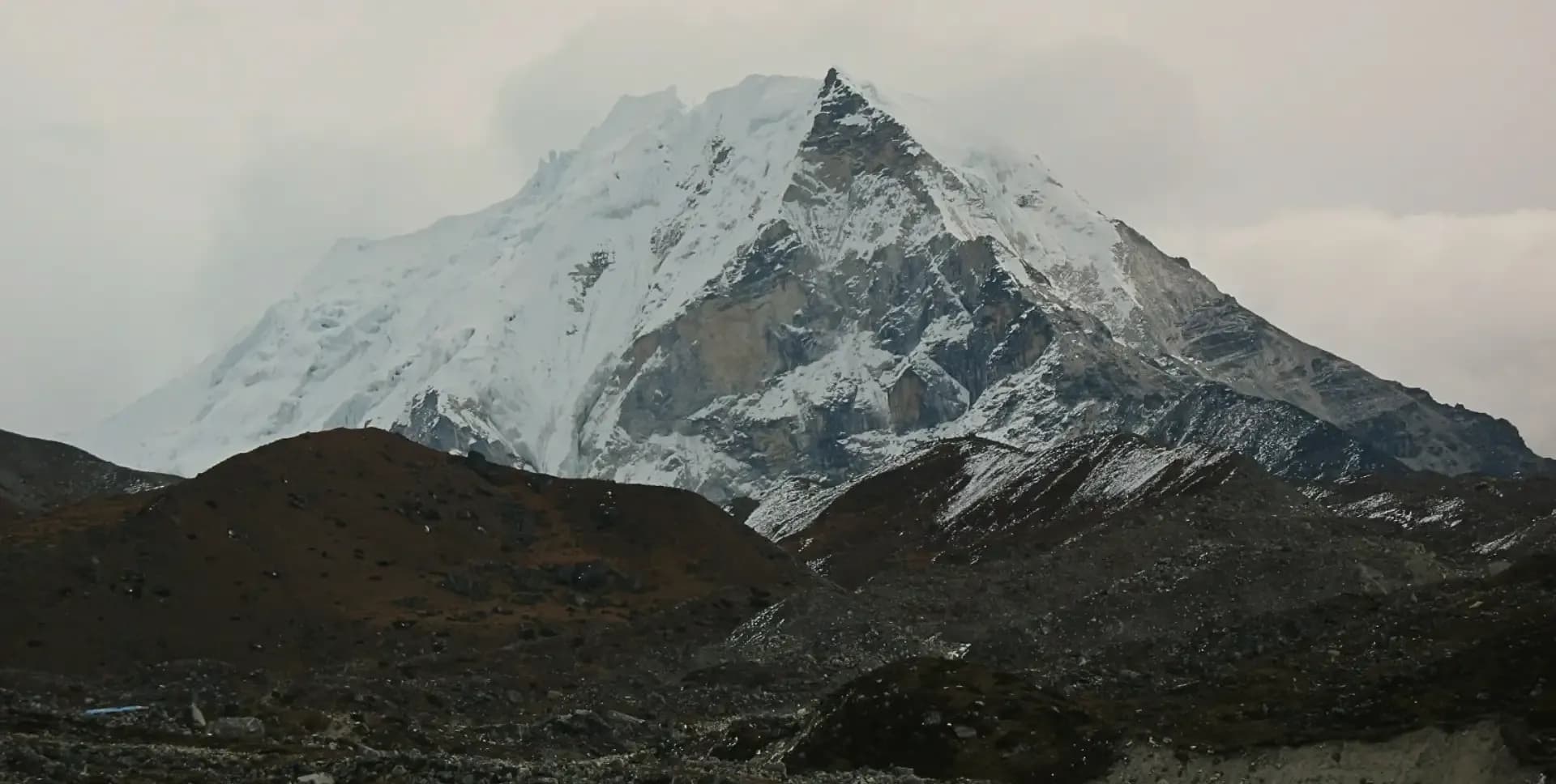
Lobuche East is one of the most recommended 6,000-metre peaks in Nepal. It rises directly above the Everest Base Camp trail near the village of Lobuche, which makes it easy to reach and allows climbers to acclimatize naturally while trekking through the heart of the Khumbu. The mountain has two summits. Lobuche East (6,119 m / 20,075 ft) is classified as a trekking peak by the Nepal Mountaineering Association, while Lobuche West (6,145 m / 20,162 ft) is an expedition peak connected to the East summit by a long ridge. This program is for climbing the East Summit.
Lobuche East is considered a less technical climb, but the mountain should never be underestimated. Sudden changes in weather, steep snow and ice, and the thin air above 6,000 meters can make the ascent far more demanding than expected, especially for climbers without solid technique. Basic skills such as walking in crampons, using an ice axe, ascending fixed lines and rappelling are essential. Your Sherpa guide will review these before the summit push, and the 1:1 guide-to-climber ratio means close attention throughout the climb.
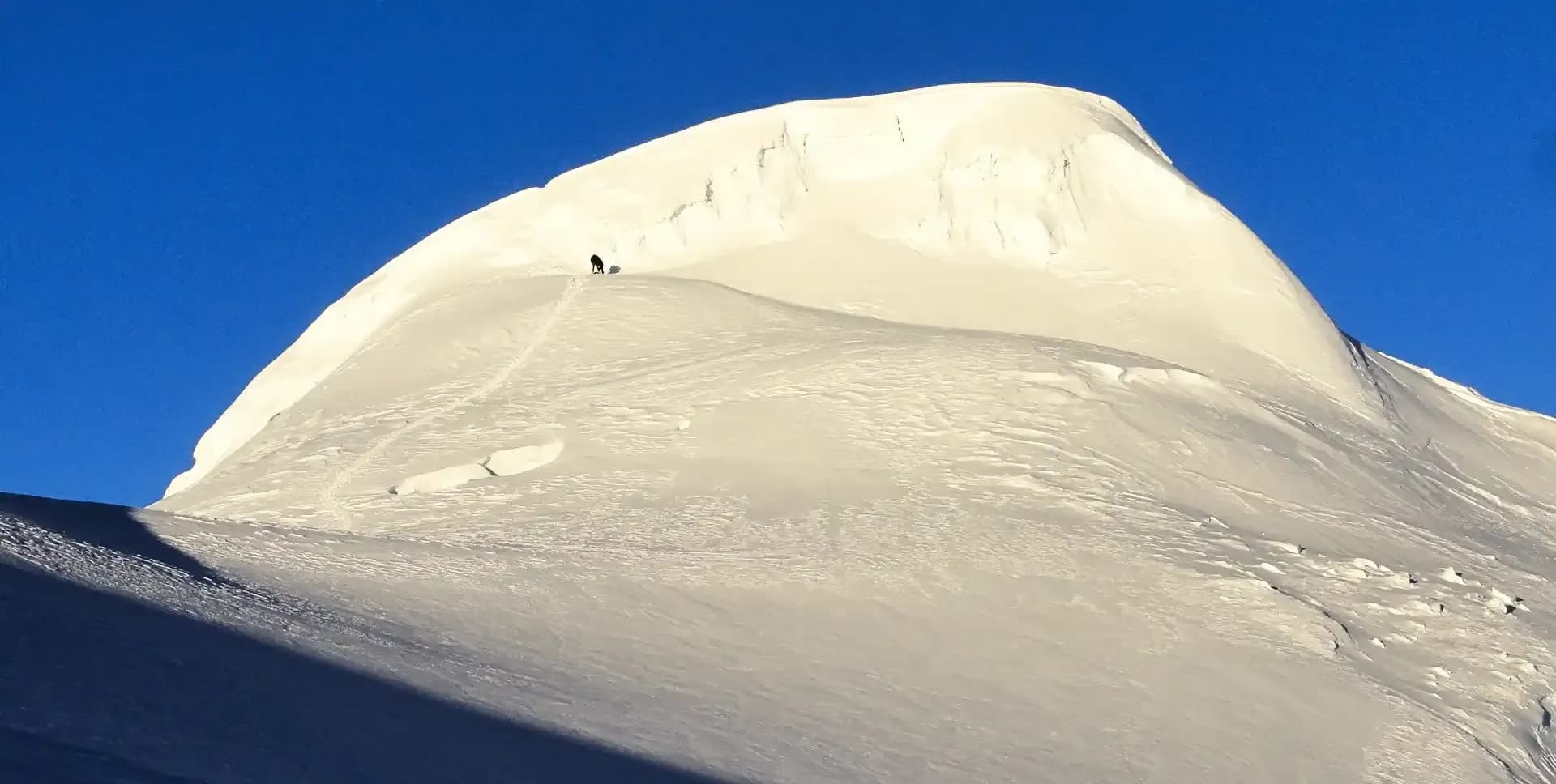
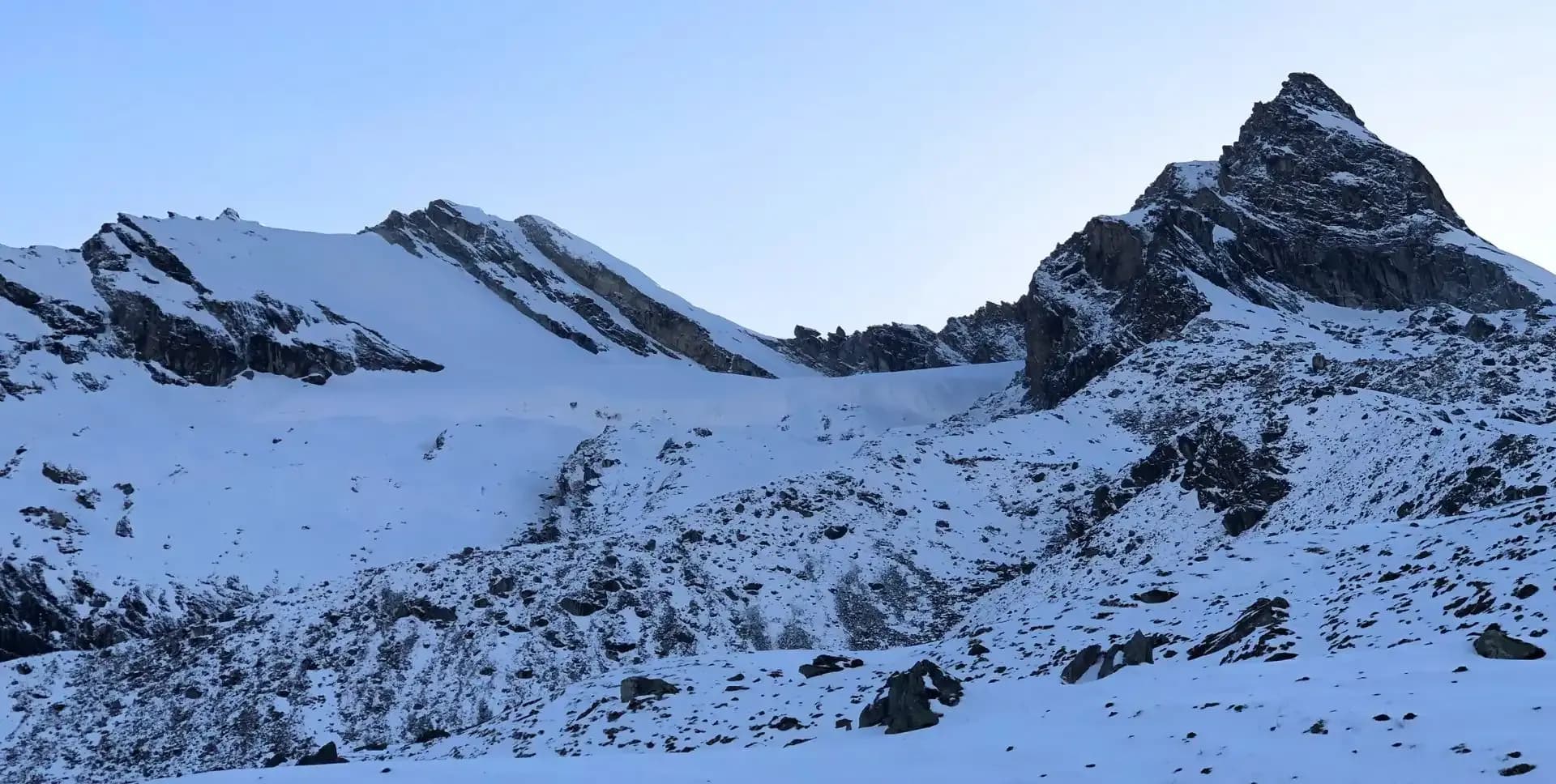
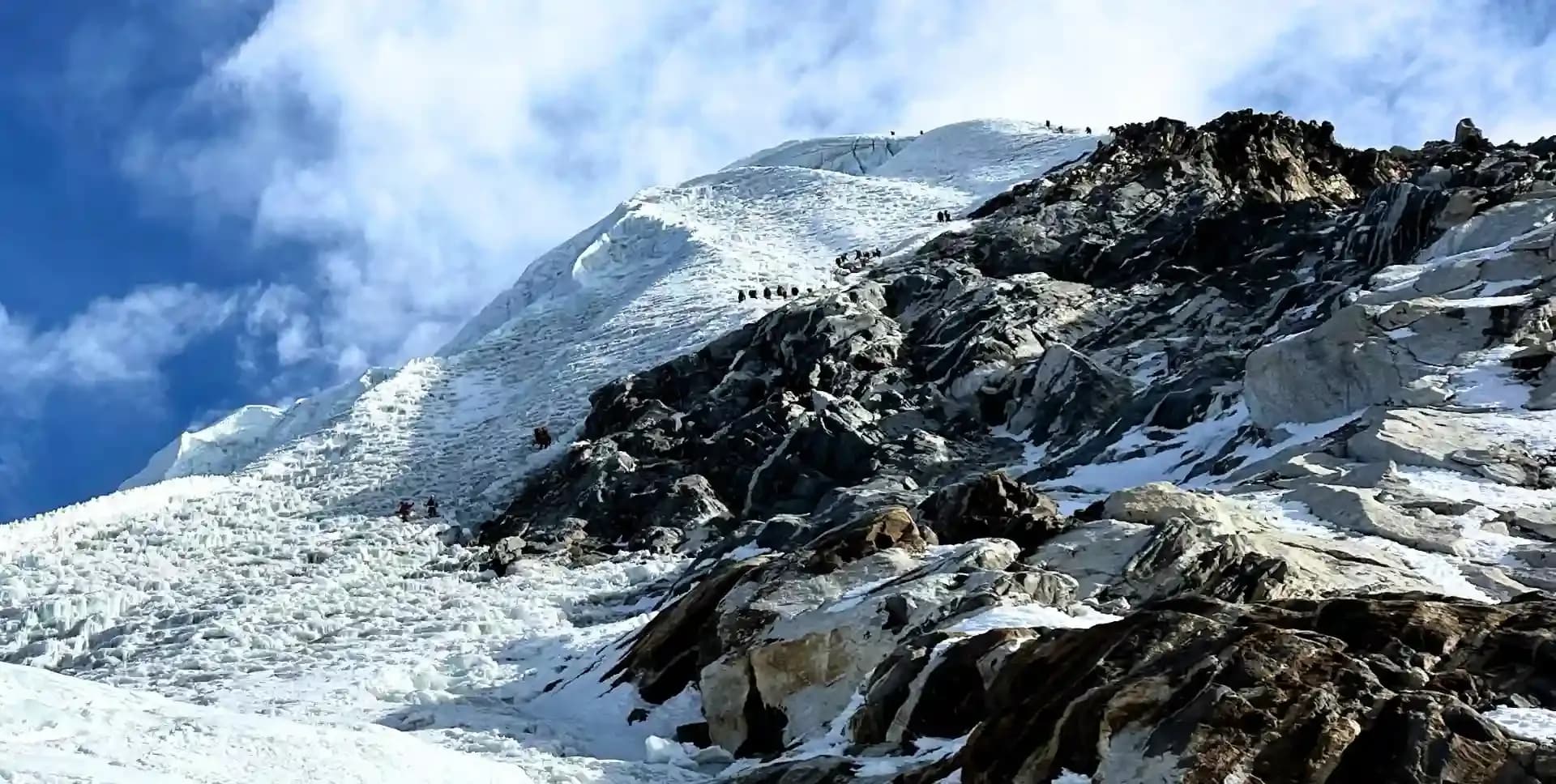
The climb follows the south ridge of the mountain. Our high camp sits at around 5,300 meters above a small lake known as Tsho La Tso, at the foot of the rock slabs beneath the southwest face, with superb views of Ama Dablam, Taboche and Cholatse. On summit day we climb slabs, terraces and ramps to the ridge, continue to the crampon point, then follow the edge of the snow to the shoulder and along the narrow southeast ridge to the subsidiary summit, sometimes called Lobuche Far East. This section is graded Alpine PD+. The main summit lies beyond an awkward notch; reaching it involves rappelling into the notch and climbing steep snow and ice on the far side, graded Alpine D+. Many parties finish at the subsidiary summit, and your guide will decide on the day based on conditions and the strength of the team.
Our 18-day itinerary is built around acclimatization. We follow the classic Everest Base Camp trail through Namche Bazaar, Tengboche and Dingboche, with acclimatization hikes to Hotel Everest View and Nangkartshang Peak, then visit Everest Base Camp and climb Kala Patthar before moving to Lobuche High Camp. By the time you reach high camp you will have already slept above 5,000 meters and walked above 5,500 meters, giving you the best possible chance of a safe and successful summit.
The program suits fit trekkers with some high-altitude experience who want to take their first step into Himalayan mountaineering, and it is an excellent training climb before Ama Dablam, Baruntse or the 8,000-metre peaks.
Lobuche Peak Climbing Itinerary
Tap any day to read the full programme.
On arrival at Tribhuvan International Airport in Kathmandu, our representative will greet you at the arrival area and transfer you to your hotel. After checking in, the rest of the day is free to rest and recover from your journey or take a gentle stroll around the streets of Thamel, the city's lively tourist quarter. In the evening you will meet your climbing guide for an informal welcome and a brief introduction to the program. This is a good time to raise any initial questions about the trek, the climb or your gear. We recommend booking an international flight that arrives before noon so you have time to settle in before the program begins.
Today is set aside for preparation. After breakfast, your climbing guide will conduct a detailed briefing covering the day-by-day itinerary, the Lukla flight, altitude and acclimatization, safety procedures and the summit plan. This is followed by a thorough equipment check of your personal climbing gear, including boots, crampons, harness, helmet, ice axe, ascender, descender and clothing layers. Any missing or unsuitable items can be rented or purchased in Kathmandu, and your guide will accompany you to reliable shops if needed. The rest of the day is free for last-minute shopping or a visit to one of Kathmandu's heritage sites such as Boudhanath or Swayambhunath. In the evening you will meet your climbing companions over a welcome dinner.
We leave Kathmandu very early in the morning for the four to five hour drive to Ramechhap, from where flights to Lukla operate during the busy trekking seasons. The short twenty-minute flight offers wonderful views of the Himalaya before landing on the famous sloping runway at Tenzing-Hillary Airport. In Lukla we meet our porters and support staff, enjoy breakfast and begin the trek. The trail passes through the kaani gateway and descends gently through farmland and the villages of Chaurikharka, Cheplung and Ghat, with views of Kusum Kanguru and the Dudh Koshi River far below. Mani walls, prayer wheels and chortens line the path. After about three hours we arrive at Phakding, a riverside village where we spend our first night on the trail.
Following the Dudh Koshi River, the trail crosses several suspension bridges and passes through the villages of Toktok, Benkar and Chumoa, with Thamserku (6,618 m) shining above the pine and rhododendron forest. At Monjo we enter Sagarmatha National Park, where your guide arranges the permit formalities. A short descent leads to Jorsale, the last village before Namche and our lunch stop. Beyond it the valley narrows and we cross the high Tenzing-Hillary Suspension Bridge above the confluence of the Dudh Koshi and Bhote Koshi. From here the trail climbs nearly 600 meters in steady switchbacks, known locally as Namche Ko Ukalo. On a clear day you will catch your first glimpse of Everest above the Lhotse-Nuptse ridge before arriving in Namche Bazaar, the bustling capital of the Khumbu.
Namche Bazaar is the ideal place for our first acclimatization day. Rather than resting in the lodge, we follow the principle of climbing high and sleeping low with a hike to Hotel Everest View. The trail climbs above the natural amphitheatre of Namche past the Sagarmatha National Park headquarters, where the views of Everest, Lhotse, Ama Dablam, Thamserku and Kangtega are outstanding, and continues over the Syangboche airstrip to the hotel. From the hotel garden you can enjoy a warm drink in front of a breathtaking Everest panorama. We descend to Namche for lunch, and the afternoon is free to explore the market, bakeries and the Sherpa Culture Museum, or simply rest and let your body adapt to the altitude.
Leaving Namche, the trail climbs to a ridge and then contours high above the Dudh Koshi with superb views of Everest, Lhotse and Ama Dablam ahead. At Kyangjuma the path divides and we take the lower trail, descending through rhododendron and birch forest to Phunki Tenga on the riverbank, where we stop for lunch. Musk deer, Himalayan tahr and Danphe pheasants are often seen in this forest. From the river a steady two to three hour climb through rhododendron and juniper brings us to the meadow at Tengboche, home to the largest monastery in the Khumbu. The setting, with Ama Dablam, Kangtega and Thamserku rising all around, is one of the most beautiful on the trek. If timing allows we attend the afternoon prayer ceremony in the monastery.
The morning begins with a view of Everest peeking above the Lhotse-Nuptse ridge from the Tengboche meadow. We descend through birch and rhododendron forest to Deboche and follow the Imja Khola, crossing a suspension bridge to reach Pangboche, the last permanent village in the valley and home to the oldest monastery in the Khumbu, founded in 1667. We stop for lunch at Somare, above which the trees disappear and the landscape opens into alpine pasture and yak grazing land, with Ama Dablam towering overhead and the pyramid of Pumori appearing ahead. Crossing a small bridge over the Imja Khola, a final climb brings us over a ridge to the windswept village of Dingboche, ringed by stone-walled potato and barley fields.
Today is our second and most important acclimatization day. After a relaxed breakfast we climb the ridge directly north of Dingboche towards Nangkartshang Peak. The ascent takes three to four hours at a steady pace, gaining nearly 700 meters, and is excellent preparation for the summit push ahead. From the top the panorama is superb: Makalu and Lhotse to the east, Island Peak and Baruntse up the Imja valley, Cho Oyu to the northwest and, importantly, a clear view of Lobuche East and Lobuche West, our objective. Ama Dablam, Taboche and Cholatse complete the scene. We descend to Dingboche for lunch, and the afternoon is free to rest, hydrate and let your body adjust to the altitude.
From here the trekking becomes gradually more demanding as the altitude increases. The trail climbs above Dingboche onto a wide terrace overlooking the Khumbu Khola valley, with Taboche and Cholatse to the left and Lobuche Peak ahead. We pass the stone huts of Dusa and drop to cross the river before a short climb to Dughla, our lunch stop. Above Dughla the path rises steeply up the terminal moraine of the Khumbu Glacier to Chupki Lhara, where stone memorials and prayer flags honour climbers who have lost their lives on Everest. The trail then eases along the edge of the glacier, and suddenly Khumbutse, Lingtren and Pumori appear on the horizon. We arrive at Lobuche in the afternoon, where nights are cold and the air noticeably thin.
The trail from Lobuche follows the lateral moraine of the Khumbu Glacier, climbing over boulders to the viewpoint at Thangma Riju with sweeping views of Pumori, Nuptse and Changtse. After crossing the rocky moraine of the Changri Glacier we descend to Gorakshep, a small settlement on the sandy bed of a former lake, about two to three hours from Lobuche. After lunch and a short rest we continue to Everest Base Camp. The path scrambles along the moraine with the ice walls of Nuptse close by, then drops onto the glacier itself, winding past seracs and icy pools. Prayer flags mark the base camp, with the Khumbu Icefall tumbling down above it. After time to take it all in and photograph the scene, we retrace our steps to Gorakshep.
We set out before dawn for the climb to Kala Patthar, the finest viewpoint in the Everest region. The trail zigzags up the ridge below Pumori, and the final stretch requires some scrambling over boulders. From the summit the sunrise view is unforgettable: the dark pyramid of Everest, the Khumbu Icefall, Nuptse, Lhotse, Changtse and Base Camp far below. We descend to Gorakshep for breakfast, then walk back down to Lobuche for lunch. In the afternoon we leave the main trail and climb towards Lobuche High Camp. The path is gentle at first, then steepens over rocky slabs and a short rock wall to reach the camp above Tsho La Tso lake. Your Sherpa team will have set up tents. After an early dinner and a final gear check we sleep early.
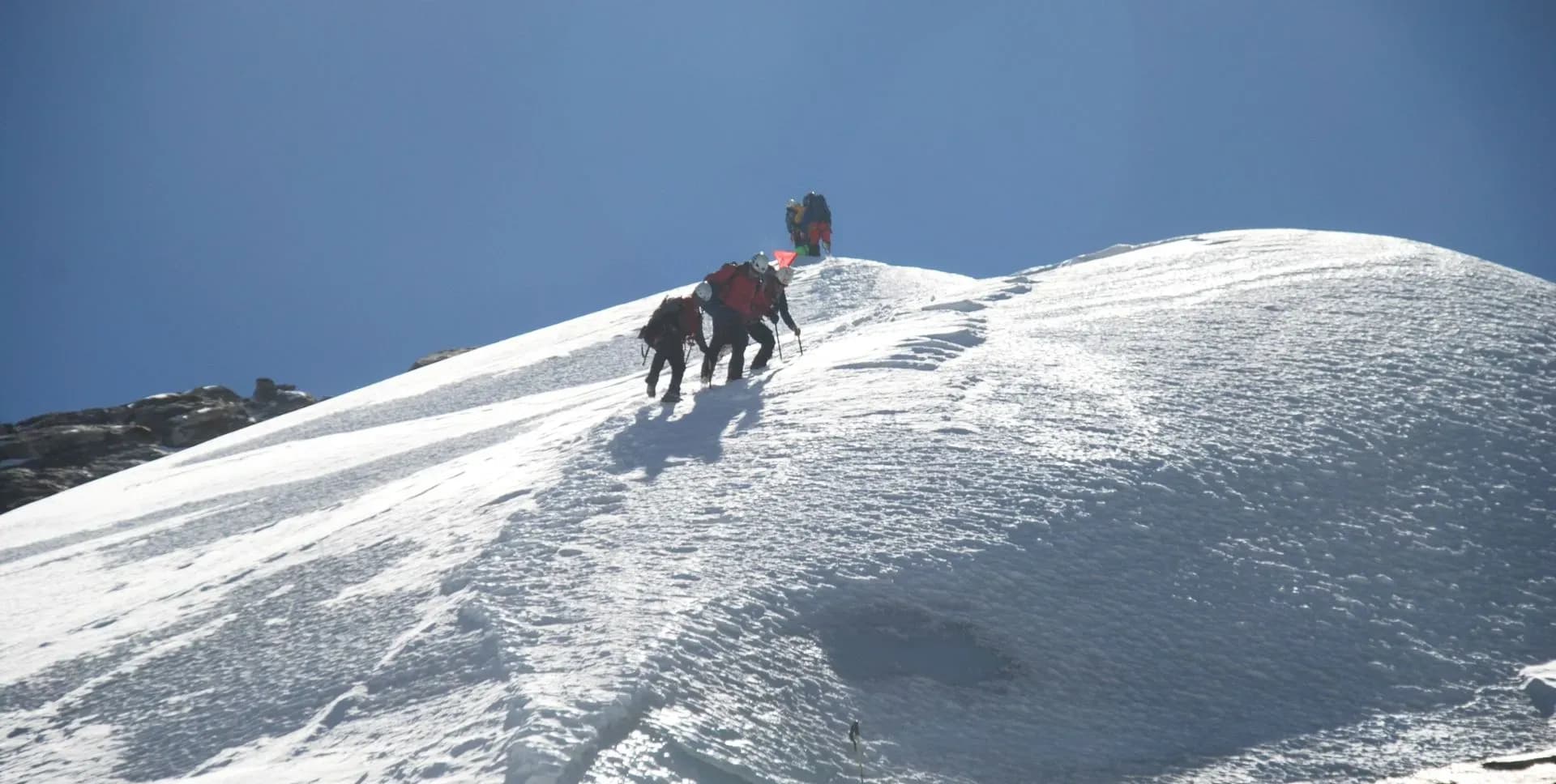
Summit day is the longest and most rewarding of the program, typically ten to twelve hours. We wake around 3 am, eat a light breakfast and start climbing by headlamp shortly after 4 am. The first two hours follow rock slabs and ledges to the crampon point, where we put on crampons and tighten harnesses for the snow and ice above. Clipped to fixed lines placed by your Sherpa guides, we climb steep snow slopes, passing crevasses on the left, for another three to four hours to the false summit. A short crossing over a crevasse and a final ten-minute climb brings us to the summit of Lobuche East, with Everest, Lhotse, Nuptse, Makalu, Cho Oyu, Pumori and Ama Dablam all around. After photographs we rappel and descend to high camp, then continue down to Lobuche.
After the effort of summit day, the descent brings a welcome sense of relief as the air grows richer with every step. We retrace the trail past the memorials at Chupki Lhara and drop to Dughla, then continue down the Khumbu Khola valley to Pheriche, where the Himalayan Rescue Association runs its high-altitude clinic. Beyond Tsuro Wog we rejoin the main trail through Somare and Pangboche, passing back into the tree line with Ama Dablam dominating the skyline. The final stretch through Deboche climbs gently through rhododendron forest to the monastery meadow at Tengboche. Arriving in the afternoon, there is time to visit the monastery again or simply enjoy the warmth of the lodge with the satisfaction of the climb behind you.
Today is a long but mostly downhill walk. From Tengboche we descend steeply through the forest to Phunki Tenga and climb back up to Kyangjuma, with a last long look at Everest, Lhotse and Ama Dablam before the trail turns away from the high peaks. After lunch in Namche Bazaar, we drop down the steep switchbacks to the Tenzing-Hillary Suspension Bridge and follow the Dudh Koshi downstream through Jorsale and Monjo, where we exit Sagarmatha National Park. The trail then passes Chumoa and Benkar, with waterfalls and views of Thamserku, before arriving at Phakding in the late afternoon. Being back among trees, fields and warmer air after nearly two weeks in the high mountains is a pleasure in itself.
Our final day on the trail is a short and easy walk of about three to four hours. From Phakding the trail climbs gradually past Ghat and crosses the Thado Koshi bridge below Kusum Kanguru, then continues through Cheplung and Chaurikharka, where the school built by Sir Edmund Hillary still stands. A last short ascent through the kaani gateway brings us into Lukla, completing the trek. The afternoon is free to relax in one of Lukla's cafés and reflect on the journey. In the evening we share a farewell dinner with the porters and support staff who have carried our loads and looked after us throughout the trek. Your guide will confirm the flight timing for the following morning.
Flights from Lukla depart early in the morning while the weather is most stable. After breakfast we check in at the airport and enjoy a final view of the mountains during the short flight to Ramechhap, followed by the drive back to Kathmandu, arriving around midday. Our vehicle will transfer you to your hotel, where a hot shower and a comfortable bed await after more than two weeks in the mountains. The rest of the day is free to rest, explore the city or indulge in some souvenir shopping. In the evening we gather for a celebration dinner with your guide and our office staff to mark the successful completion of the climb, and to present your summit certificate if you reached the top.
This day is kept in reserve in case flights between Lukla and Ramechhap are delayed by weather, or if extra time is needed during the trek or climb for acclimatization, rest or a second summit attempt. If the program has gone according to plan, the day is yours to enjoy in Kathmandu. We can arrange a guided sightseeing tour of the city's UNESCO World Heritage Sites, including Kathmandu Durbar Square, Patan, Bhaktapur, Pashupatinath and the great stupa of Boudhanath. Alternatively, treat yourself to a massage, browse the shops of Thamel or simply relax. During the day your guide will complete the final paperwork and closing briefing and confirm your departure transfer for tomorrow.
Your Lobuche East Peak climbing adventure comes to an end today. Depending on your international flight time, our representative will meet you at the hotel lobby and transfer you to Tribhuvan International Airport. We recommend leaving the hotel about three hours before departure to allow time for check-in and security. Standard hotel checkout is at noon; if your flight departs late in the evening, a late checkout can usually be arranged for a small additional charge.
Lobuche Peak Climbing Route Map
Route Map
Altitude Profile
Inclusions
• Private airport transfers in Kathmandu (arrival & departure)
• 4 nights at a 3-star Kathmandu hotel (twin-share, bed & breakfast)
• Round-trip Kathmandu/Ramechhap–Lukla flights with standard baggage allowance
• 12 nights twin-share lodge accommodation during the trek
• 1 night at Lobuche East High Camp with full-board meals and unlimited hot drinks
• Full-board meals throughout the trek (breakfast, lunch, dinner, tea & coffee)
• Drinking water and hot water for bottle refills at all lodge stops
• All required trekking permits (Sagarmatha National Park & Khumbu Pasang Lhamu Rural Municipality)
• Lobuche East Peak climbing permit, including all associated fees and garbage deposit
• Personal senior English-speaking, government-licensed climbing guide, fully covered (wages, meals, transportation, accommodation & insurance)
• One porter per client (max 30 kg/client), fully covered
• Emergency medical kit throughout the trek
• Supplemental oxygen, mask & regulator for emergency use
Exclusions
• International airfare to/from Kathmandu
• Nepal entry visa fee
• Personal travel, medical & emergency evacuation insurance (mandatory; arrange prior to departure)
• Lunch & dinner in Kathmandu
• Additional Kathmandu nights beyond the itinerary (available on request)
• Single room supplement or forced single room charges, where applicable
• Personal trekking & climbing gear (sleeping bag, boots, trekking poles, down jacket, harness, crampons, etc.)
• Alcoholic beverages, specialty hot drinks & bottled/canned drinks during the trek
• Lodge extras charged locally: hot showers, battery charging & Wi-Fi
• Lobuche East Peak summit bonus of USD 300 for the climbing guide
• Any personal expenses not listed under inclusions
• Climbing guide & porter gratuities (recommended: USD 200/climbing guide, USD 120/porter — at client's discretion)
Date & Price
Want a Private or Tailored Trip?
Book on your own dates, bring a private group, or adjust the itinerary. Our team replies within 24 hours.
Reviews
Write a review
No reviews yet. Be the first to share your experience.
Gallery
No gallery images available.
From (per person)
People also viewed